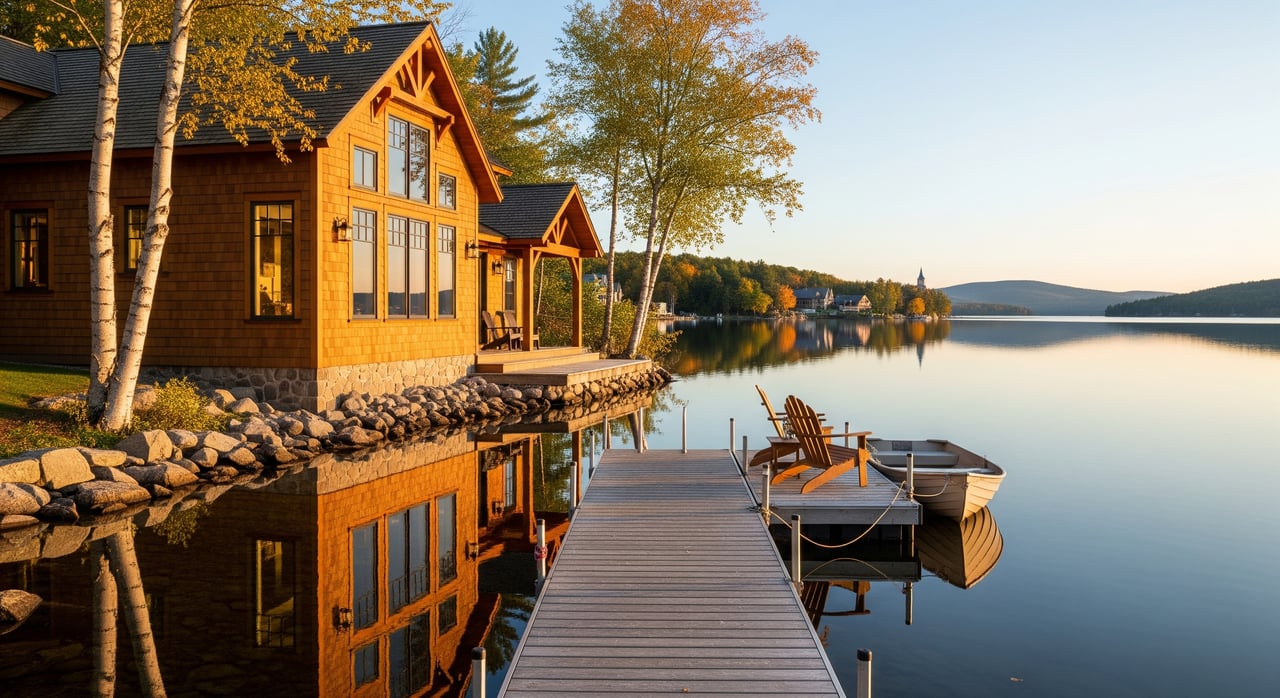
Dreaming of morning coffee on Lake Flower or a quick stroll to grab dinner on Broadway? In Saranac Lake, you can choose a shoreline retreat or a home close to shops, schools, and year-round services. Each option offers real benefits, and each comes with practical tradeoffs you should understand before you buy or sell. In this guide, you’ll compare lifestyle, costs, utilities, insurance, permits, and resale, plus get checklists you can use today. Let’s dive in.
Saranac Lake living at a glance
Saranac Lake sits in the Adirondacks with lakes and river corridors shaping daily life. Within or near the village, you will find Lake Flower, Oseetah, and stretches of the Saranac River, along with access to the wider Saranac Lakes chain. “Lakefront” can mean a private shoreline with a dock or a riverfront lot, while “in-town” homes cluster near downtown services and municipal utilities.
Many parcels lie within the Adirondack Park, so some projects require oversight from the Adirondack Park Agency. This extra layer matters for shoreline work, tree removal, and new structures. The market here serves year-round residents and second-home buyers, so demand can be seasonal. Always confirm current market data through the local MLS before you make a move.
Lakefront vs in-town: key differences
Price, taxes, and resale
Lakefront homes typically command a premium because of water access, views, and limited supply. Exact premiums vary by specific lake, shore orientation, and the condition of buildings. Assessments and taxes reflect location and jurisdiction, which can differ between the Village of Saranac Lake and neighboring towns.
Resale dynamics also differ. Lakefront inventory is scarce and buyer interest can be seasonal. In-town homes often attract a broader buyer pool and may move faster, although you should verify days on market and inventory trends through recent MLS reports.
Insurance and lending
Waterfront parcels are more likely to sit in FEMA flood zones. If a property falls in a Special Flood Hazard Area, most lenders will require flood insurance, and some may ask for an elevation certificate. Even outside mapped zones, insurers may price in additional wind and water risk, including dock and boathouse liability.
Underwriting can vary for primary residences versus seasonal cabins. Nonstandard utilities, private roads, or vacant seasonal status can lead to extra lender conditions. Speak early with a mortgage professional who knows Adirondack lake properties so you can set realistic timelines and contingencies.
Utilities and services
In-town homes are more likely to connect to municipal water and sewer, which can simplify maintenance. That said, not every in-town address is on both systems, so you should verify.
Lakefront properties often rely on private wells and septic systems. System age, capacity, and permitting status are major points in a transaction, especially if you intend to live year-round. Confirm whether municipal service lines run near the parcel and whether a hook-up is possible, including any district fees.
Maintenance and access
Lakefront ownership comes with specialized upkeep. You may manage docks, shoreline stabilization, erosion control, and seasonal chores related to ice and boating. Shoreline structures sometimes require permits for repairs or replacement.
In winter, lakefront access can require private plowing and planning for freeze conditions. In-town homes typically benefit from municipal road maintenance and shorter access to services. If a lakefront property sits on a private road, budget for shared agreements and seasonal maintenance.
Lifestyle and amenities
A lakefront home centers your day around the water. You can boat, swim, and enjoy wide views, often with greater privacy. Noise from boats and seasonal gatherings can be part of the setting, which you should weigh during peak months.
In-town homes offer walkability to shops, restaurants, the arts scene, and public facilities. Proximity to schools in the Saranac Lake Central School District and community events may be valuable if you want consistent access to services and activities.
Environmental and rules
Adirondack waters face aquatic invasive species concerns, and some waterbodies experience summer algal blooms. If you plan to keep a boat or swim often, learn the lake’s AIS status and any boat inspection or decontamination practices.
Shoreline projects can trigger rules from the village or town, the Adirondack Park Agency, and state environmental agencies. Wetlands, buffers, dock size, and vegetation removal are common review items. Do not assume older docks or boathouses are legal to rebuild without permits.
Pros and cons at a glance
Lakefront highlights
- Direct water access for boating and swimming.
- Scenic views and privacy.
- Strong lifestyle appeal and limited supply.
Lakefront tradeoffs
- Higher purchase price and potentially higher insurance.
- More complex permitting for shoreline work and structures.
- Added maintenance for docks, erosion control, and winter access.
In-town highlights
- Walkability to dining, shops, and services.
- Greater likelihood of municipal water and sewer.
- Broad resale appeal for year-round living.
In-town tradeoffs
- No private shoreline or dock.
- Smaller yards in some neighborhoods.
- Street activity and parking considerations near busy areas.
When lakefront makes sense
- You want daily access to the water and views to match.
- You are comfortable managing or hiring for shoreline and dock maintenance.
- You can verify utilities, flood status, and permits, and you plan for seasonal access.
- You value a retreat setting and accept potential seasonality in buyer interest at resale.
When in-town makes sense
- You prefer walkable access to restaurants, services, and community events.
- You want simpler utilities and maintenance, often with municipal water and sewer.
- You prioritize year-round access and shorter service response times.
- You want broad resale appeal without the added complexity of shoreline rules.
What to verify before you buy lakefront
Use this checklist to streamline due diligence:
- Confirm the parcel’s municipal jurisdiction and zoning.
- Check FEMA flood map status and obtain an elevation certificate if needed; request flood insurance quotes early.
- Inspect and pump the septic system; verify age, capacity, permits, and suitability for year-round use.
- Obtain well water test results and consider a yield test if supply is critical.
- Review recorded easements, shared dock agreements, and private road agreements.
- Confirm the legality and permits for docks, boathouses, and any shoreline structures.
- Ask about shoreline stabilization or riprap, permits, and erosion history.
- Investigate aquatic invasive species and any boat inspection or decontamination requirements for the specific waterbody.
- Verify electric service reliability, internet and cell coverage, and winter snow removal plans.
- Order a shoreline survey and a full home inspection that looks at water intrusion, foundation, mold, and winterization.
- Discuss mortgageability with your lender if the home is seasonal or has nonstandard utilities.
Questions to ask your lender and inspector
For your lender:
- Will flood insurance be required based on the property’s FEMA map status?
- Are there additional conditions for a seasonal or second home in this area?
- How do private roads, shared driveways, or nonstandard utilities affect underwriting?
- What documents will you need, such as an elevation certificate or septic records?
For your inspector:
- What is the condition and capacity of the septic, and is it suited for year-round use?
- Are there signs of water intrusion, shoreline erosion, or ice damage to the structure or dock?
- Is the property properly winterized, and how is the HVAC performing under cold-weather conditions?
- Do you recommend further evaluations, such as a shoreline survey or water quality testing?
Local rules and who to call
When you narrow your shortlist, contact the right offices to verify details:
- Village of Saranac Lake Building and Zoning for zoning maps, permits, short-term rental rules, and water or sewer districts.
- The town where the parcel sits for zoning, road maintenance, and tax jurisdiction if outside the village.
- Adirondack Park Agency for shoreline development guidance within the Adirondack Park.
- New York State Department of Environmental Conservation, Region 5, for aquatic invasive species and water quality.
- FEMA Flood Map Service Center for flood zone designations and panel numbers.
- Franklin County Real Property and the local health department for parcel records, assessments, and septic permitting.
Getting ready to sell: quick prep list
If you plan to sell a lakefront home, prepare documents that answer buyer questions up front.
- Gather permits and records for docks, boathouses, riprap, and shoreline work.
- Provide septic inspection reports or recent pump records, plus well water tests.
- Note any flood claims, repairs, and insurance history.
- Highlight year-round access, available utilities, and recent upgrades that reduce buyer risk.
- Confirm boundaries and consider a survey that clearly shows shoreline features and setbacks.
- Understand local short-term rental rules if you plan to market rental potential.
Final thoughts
There is no one-size-fits-all answer to lakefront versus in-town living in Saranac Lake. Lakefront delivers unmatched water access and views, with higher maintenance and more complex rules. In-town living offers convenience, municipal services, and broad resale appeal, without private shoreline. The best choice is the one that fits your daily life, budget, and long-term plan.
Want a clear, property-by-property comparison in 12983? Reach out to Bob Miller Real Estate for a local consult tailored to your goals.
FAQs
Do I always need flood insurance on a Saranac Lake lakefront home?
- Not always. Many waterfront parcels fall in FEMA flood zones or lenders may require flood endorsements, so you should check flood maps and obtain an elevation certificate when needed. Get quotes early.
Are private septic and well systems a dealbreaker for Adirondack lakefronts?
- They do not have to be, but issues can arise if systems are undersized, failing, or not permitted for year-round use. Plan to include a septic inspection and well test in your contingencies.
Can I build or replace a dock or boathouse in the Adirondack Park?
- Possibly. Docks and boathouses are regulated at multiple levels, and replacement of older, nonconforming structures can be complex. Expect permits and agency reviews before work begins.
Is lakefront property always better for resale in 12983?
- Not necessarily. Lakefront typically carries a premium, yet results depend on specific lake desirability, shoreline quality, and buyer demand. In-town homes may benefit from steadier year-round interest.
Are short-term rentals allowed in Saranac Lake homes?
- Rules vary by village or town and can change. Confirm licensing, zoning, and occupancy or tax requirements with local officials before you buy or list.
What environmental risks should Saranac Lake buyers consider?
- Flooding, shoreline erosion, aquatic invasive species, and occasional algal blooms. Review local lake health data, ask about AIS status, and include inspections that look for water intrusion and shoreline conditions.